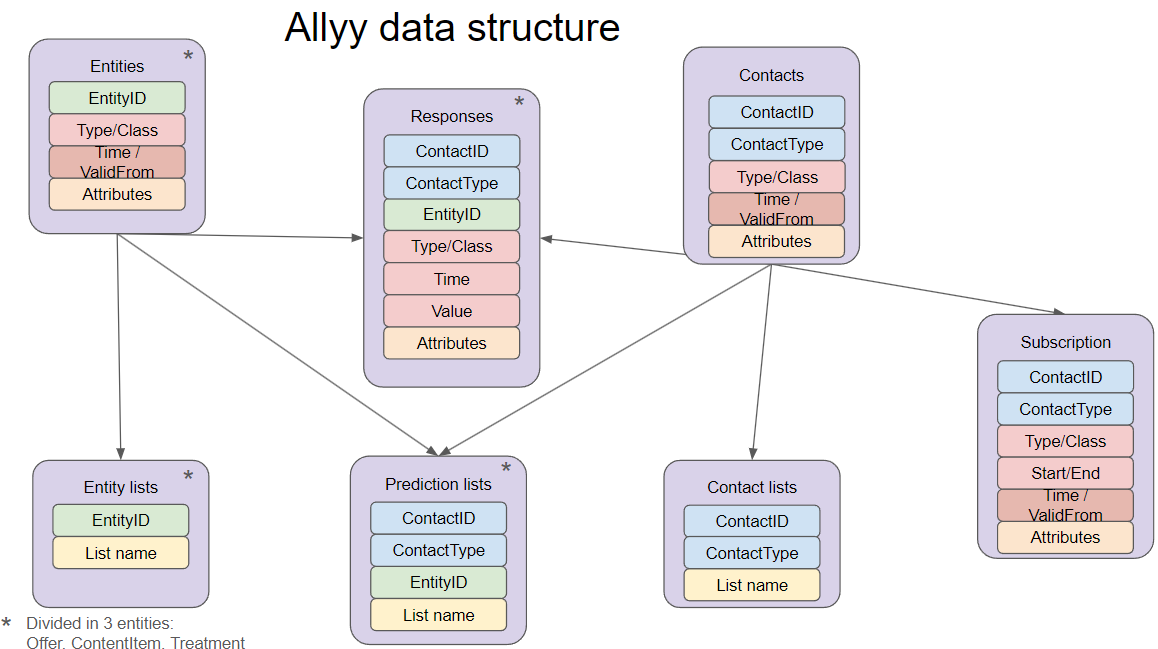
The core entities
Contacts
The people or organisations you engage — your supporters. Carry static attributes like age, gender, postcode, and acquisition source.
Offers / Content / Treatments
The campaigns a contact can be targeted by — an appeal, a mailing, a telemarketing or email campaign. One row per campaign, describing what it was. The “what we sent”.
Responses
An interaction between a contact and an offer — a donation, a click, an open, a refusal. The “what happened”. Responses carry a timestamp and, for donations, an amount.
Subscriptions
A standing agreement — a recurring donation / direct debit / standing order — with a start date and an optional end date (open-ended while active).
How the entities relate
A Contact receives an Offer; their reaction is a Response; if they commit to give regularly, that’s a Subscription. Models and analytics are built by combining these — for example:- DM propensity learns from Responses to past Offers, per Contact.
- Subscription churn learns from Subscriptions and their Responses (payments).
- Income concentration (analytics) aggregates donation Responses across Contacts.